


Popped, Hollow and Debonded Tiles in Singapore: Causes, Safety, Repair and Who Pays
Tiles pop or sound hollow when the bond between tile, adhesive and screed fails, usually from thermal movement without movement joints, poor adhesive coverage, an uncured substrate or age. Indoors, the unit owner generally pays after the developer's 12-month defects period. On façades, falling tiles are a public-safety risk handled through the MCST or owner and BCA's Periodic Façade Inspection.
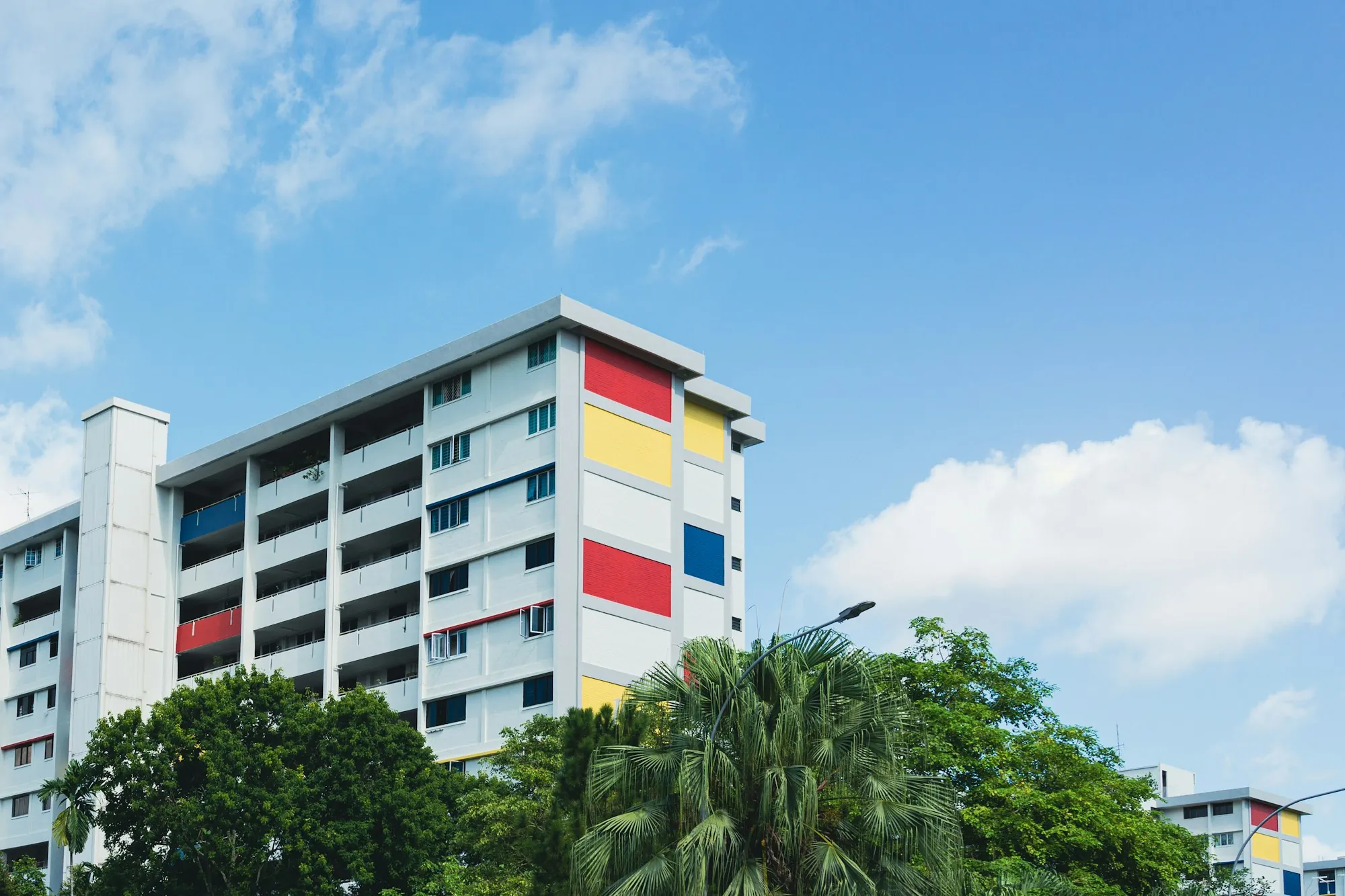
Few household defects are as startling as a floor that cracks open on its own. One night there is a sharp report, and by morning a row of tiles in the living room has lifted into a ridge. In Singapore this is common enough to have been raised in Parliament more than once. MND reported in 2017 that HDB received about 2,000 cases of dislodged floor tiles a year, roughly two cases per 1,000 flats annually.3 Private condominiums, landed homes, offices and shopping centres see the same failure.
Inside a home, a popped tile is usually a nuisance, a trip hazard and a repair bill. On a building façade it is a different matter: a tile that debonds at height can fall onto a walkway, a car park or a playground. That is why tiles are expressly within the scope of BCA’s Periodic Façade Inspection regime, and why BCA’s latest PFI Guidelines now cite research showing that tile adhesive may have the shortest service life of the façade materials studied under projected climate conditions.5
This guide explains why tiles pop, tent and go hollow, how to test and map the problem, what repairs work, and who pays: the unit owner, the MCST, or the developer during the defects liability period. It draws on BCA’s Good Industry Practices – Ceramic Tiling guide, the CONQUAS and Quality Mark standards, BCA’s PFI Guidelines Version 1.3, statements by MND in Parliament and Singapore case law.
Popped, tented, hollow, debonded: the terms
Owners and contractors use several words for related failures. They are worth separating, because the repair and the responsibility differ.
| Term | What you see or hear | What is happening | Typical urgency |
|---|---|---|---|
| Hollow tile | A dull, drummy sound when tapped; tile looks normal | Voids under the tile, or partial loss of bond between tile and adhesive, or adhesive and screed | Low indoors if isolated; high on walls and façades |
| Debonded tile | Hollow over most of its area; may rock underfoot | Adhesive has lost grip on tile or substrate | Medium; will usually progress |
| Popped or tented tiles | Tiles lift into a ridge or “tent”, often with a loud crack | Built-up compressive stress released where bond is already weak | High indoors (trip and cut hazard) |
| Cracked tile | Crack across the tile body | Impact, substrate crack below, or stress concentration | Depends on cause |
| Hollow screed | Hollow sound over a wider zone, often across several tiles | The screed itself has separated from the slab | Higher; repair needs to go deeper |
BCA’s tiling guide lists the possible causes of hollowness as entrapped air or voids in the setting bed or slab, an irregular subsurface, and separation of a waterproofing membrane between slab and bedding. It describes the membrane case as an acoustic effect rather than a bonding problem.1 In other words, not every hollow sound means a tile is about to fail. Extent, location and change over time matter more than the sound alone.
Why tiles pop and debond
A tiled floor or wall is a sandwich: tile, adhesive or mortar bed, screed or render, then the concrete slab or masonry wall. Each layer expands and contracts at a different rate with heat and moisture. The bond holds the sandwich together; anything that weakens it, or increases the stress it carries, raises the risk of failure.
1. Thermal and moisture movement
MND’s explanation to Parliament was direct: tiles may dislodge because of differential thermal expansion and contraction, or the natural deterioration of the bond between tile and screed, both of which cause loss of adhesion.3 In February 2018 MND linked a spike in reported cases in the first half of January 2018 to unusually cold weather over a prolonged period and temperature fluctuations, which could make tiles and substrate contract and expand at different rates.2 HDB’s own home-care guide gives the same causes for dislodged or popping tiles: thermal movement and water absorption.4
Large rooms, floors near full-height glazing, balconies and roof terraces in direct sun see the largest temperature swings and are where tenting most often starts.
2. Missing or inadequate movement joints
Movement joints are deliberate, sealant-filled gaps that let a tiled area expand without pushing against itself or its boundaries. BCA’s tiling guide recommends them at structural joints, where tiling meets restraining surfaces such as columns, beams, walls, kerbs and pipes, where the substrate changes material, and in bays across large areas.1
| Location (BCA Table 2.4) | Recommended spacing or width |
|---|---|
| Structural movement joints | Carried through screed, bedding and tile; not narrower than the structural joint |
| Abutting restraining surfaces (columns, beams, perimeter walls, kerbs, pipes, ceiling) | Provide a joint |
| Change of substrate or alignment (e.g. clay brick to aerated block, concave corners) | Interior walls 3 to 5 mm; interior floors at least 5 mm |
| Bays on interior walls | Every 5 to 6 m |
| Bays on interior floors | Every 5 to 7 m |
| Interior floors and walls exposed to direct sunlight | Every 3.6 to 7 m |
Source: BCA, Good Industry Practices – Ceramic Tiling (3rd ed.), Table 2.4.1
Many homes and older buildings have tiles butted tight to skirting and walls with grout all round, and no intermediate joints across open-plan living areas. When the tiles expand there is nowhere to go except up. BCA’s list of causes for cracked tiles and adhesion failure includes “inadequate provision of expansion or control joints”.1
3. Poor adhesive coverage and workmanship
The single most common workmanship cause is voids behind the tile. Spot-fixing (a few dabs of mortar), adhesive that has skinned over because the tile was placed after the adhesive’s “open time” had lapsed, insufficient tapping of tiles into the bed, and dust or dirt on the tile back all reduce the bonded area. BCA lists each of these as possible causes of adhesion failure.1 For large-format tiles, the guide states that adhesive should be applied to both the slab and the back of the tile to achieve sufficient coverage, a practice usually called back-buttering.1
Adhesive selection matters too. BCA notes that tile adhesives fall into three types under EN 12004 and ISO 13007-1, cementitious (C), dispersion (D) and reaction resin (R), that no single adhesive suits every tile and substrate, and that tensile adhesion strength should be chosen for the worst combination of site conditions and workmanship, considering strength after water immersion and heat ageing.1
4. Substrate not ready
Tiling over a substrate that is still drying is a recipe for debonding. BCA’s guide says that if tiling is installed on a substrate that is not completely cured, moisture movement may debond cementitious adhesive. Its preparatory checks include:1
- reinforced concrete cured for 28 days before tiling;
- floor screed and wall render air cured for at least 7 days before tiles are laid;
- surface moisture content below 6%, or as the tile manufacturer specifies, the common check used in Singapore;
- any hollowness or cracks in the screed rectified before tiling; and
- a non-oxidising mesh considered for screeds thicker than 50 mm, and metal lathing for render thicker than 20 mm.
Programme pressure on new projects and on renovations with tight handover dates is the usual reason these periods are shortened.
5. Premature loading and impact
BCA recommends no traffic on new floor tiling for 4 days after completion, then only light foot traffic for a further 10 days, and no heavy vibration nearby while materials cure.1 Moving furniture and trolleys across fresh tiling, or hacking works next door, can break a bond that never had a chance to develop.
6. Age and the deterioration of the bond
Even good tiling does not last forever. MND has described the deterioration of the tile-to-screed bond as natural wear and tear.3 The NUS research cited by BCA, discussed below, puts numbers on this for external tile adhesive.
7. Renovation tiling
When MND analysed the January 2018 spike, it found that close to half of the cases reported in HDB flats involved tiles installed by flat owners during their own renovations.2 Overlaying new tiles on old, laying over existing cracks, or omitting movement joints are common renovation shortcuts. If you are renovating a condominium unit, see our guide on condo renovation approvals and MCST rules.
The façade problem: when a tile can fall
Indoors, a popped floor tile is a trip hazard. A wall tile that debonds on the 15th storey is a falling object. BCA has said it received nearly 30 reports of falling façade elements a year in the years before it introduced the PFI regime.6
Tiles are within PFI scope
The PFI regime applies to buildings taller than 13 metres and more than 20 years old, other than landed houses used solely as residences and temporary buildings, with later inspections from the 7th year after the last notice.5 The scope of inspection expressly includes “any tile, cladding, curtain wall, siding, plaster, bracket or cornice”.5 BCA’s guideline lists cracked and loose wall tiles among the common façade defects, and its photographs of typical defects include fallen tiles.5
The Competent Person must carry out a close-range inspection of at least 10% of the surface area of each elevation, which requires physical contact with the façade to detect delamination, debonding or hollowness in plaster and tile, using probing tools such as a tapping rod or rubber mallet.5 Where infrared thermography is used, BCA’s Technical Reference TR 119: 2024 applies, and adopting automated technologies such as robotic tapping devices needs the Commissioner of Building Control’s approval.5
If the visual and close-range inspections reveal extensive or systemic defects, such as several loose tiles, BCA’s guideline says a full façade investigation is warranted, which needs an application to the Commissioner.5 Each façade type is then classified as “Safe”, “Require Repair” or “Unsafe”, and any element found loose or dangling must be removed immediately.5 Use our PFI checker to see when your building falls due, and read how façade defects are rectified after the report.
What the NUS research says about tile adhesive
BCA’s Guidelines on Periodic Façade Inspection, Version 1.3 (September 2026), added a new section summarising a 2024 NUS research programme on how projected climate change affects the service life of façade materials in Singapore.5 The team used accelerated weathering, designed with reference to BS ISO 15686-2:2012, ASTM E632 and NBS Technical Note 1120, and correlated laboratory ageing with samples taken from existing buildings, using Meteorological Service Singapore climate projections to 2100.5
For tile adhesive, defined as polymer-modified Portland cement mortar with a minimum performance criterion of tensile adhesive strength above 0.5 MPa under BS ISO 13007-1, the findings in Annex F were:5
| Measure (tile adhesive) | Value in BCA PFI Guidelines V1.3, Annex F |
|---|---|
| Service life from previous desktop study | 25 to 50 years |
| Reduction in service life under climate change | 9 to 30% |
| Mean service life | 53 years |
| Lower-bound service life due to climate change | 10 years |
| Lower-bound service life | 14 years |
10 years lower-bound service life of façade tile adhesive under projected climate stress, per the NUS study cited by BCA5
BCA’s summary is blunt: of the cement-based materials studied, tile adhesive “presents the greatest concern”, with service life dropping to 10 years, up to a 30% reduction under climate stress.5 The guideline adds two caveats that owners should read carefully. The study excludes degradation due to workmanship, and Competent Persons must base their final assessment on actual defect findings and the building’s own exposure.5 The research does not mean every tiled façade fails at 10 years. It does mean that a tiled façade older than one PFI cycle should not be assumed sound because it looks fine from the ground.
The tile that fell on a Sunday
Composite scenario. A 25-year-old condominium has mosaic-tiled external walls. Residents notice a few missing tiles at high level but nobody reports it. One weekend a section about the size of a dinner tray drops into the landscaped deck near the pool; no one is hurt. The MCST cordons the area and calls in a Competent Person, who finds widespread hollowness on two sun-facing elevations during close-range tapping. The chain that follows: emergency removal of loose tiles by rope access, protective hoarding over walkways for months, a full façade investigation application, a special levy for re-cladding two elevations, and strained relations with residents whose balconies became work zones. Earlier tapping surveys and phased re-bedding would have cost a fraction of the emergency response.
The hollow-sound test: how to inspect tiles
The tapping test is simple, cheap and the standard method used in Singapore. CONQUAS requires that tiled floors and walls give “no hollow sound when tapped with a hard object” and show no sign of delamination.7 BCA’s tiling guide shows the check being done with a tapping rod.1
How to carry out a tapping survey of floor or wall tiles
- Prepare a plan. Sketch the room or elevation to scale, or print the floor plan, and mark tile rows and columns so each tile can be referenced.
- Use the right tool. A light hammer, a tapping rod with a small metal ball, or the handle of a screwdriver. Tap gently; you are listening, not striking.
- Tap systematically. Work in rows. Tap the centre and each corner of every tile, because debonding usually starts at edges and corners.
- Listen for the change in note. A sound tile gives a sharp, solid click. A hollow or debonded tile gives a dull, drummy sound. Compare with a known-sound area.
- Mark and record. Mark hollow tiles with removable tape and record them on the plan. Note whether the whole tile, or only a corner, is hollow.
- Look for other signs. Hairline cracks along grout lines, grout crumbling, tiles slightly proud of their neighbours, edges rocking underfoot, and cracked or missing perimeter sealant.
- Photograph and date. Photograph the marked area with a scale. Repeat the survey in a few weeks: spreading hollowness indicates an active problem.
- Escalate where needed. Extensive, spreading or wall and façade hollowness should be assessed by a qualified person before anyone decides on a repair.
An Illustrative way to read the result: in a 40 m² living room laid with 600 × 600 mm tiles (about 110 tiles), finding three isolated hollow corners suggests local voids worth monitoring; finding 25 hollow tiles clustered in the sunniest half of the room, with cracked grout and no perimeter joint, suggests an imminent tenting failure and a need to re-lay with movement joints. These numbers are illustrative, not a standard.
Inspecting façade tiles
Do not attempt to tap façade tiles yourself from windows or balconies. Close-range façade inspection needs safe access, usually by gondola, rope access or a mobile elevated work platform, and in a PFI it is directed by the Competent Person.5 See rope access vs scaffolding vs gondola for the access choice. From the ground, owners and managing agents can still watch for warning signs: missing tiles, bulging areas, cracks running across tiles, staining from water behind the tiles, and fragments found at the base of walls.
Warning signs that need prompt action
- Tiles lifting, tenting or rocking underfoot, or an audible crack from the floor
- Hollowness that has spread since the last check
- Hollow wall tiles above head height, especially over doorways, corridors or kitchens
- Any loose, bulging or missing tile on an external wall or façade
- Tile fragments found at the foot of a façade, on canopies or ledges
- Cracks in tiles that line up with a crack in the wall or slab behind
- Water staining or efflorescence in grout lines, suggesting water behind the tiles
Repair options
The right repair depends on the cause, the extent and whether the substrate is sound. Repairing the visible tiles without addressing the cause usually means the problem returns.
| Situation | Typical repair approach | Notes |
|---|---|---|
| Isolated hollow tiles, intact and level | Monitor; or re-bond by injection through grout joints | Injection relies on the cause having stopped and a sound bed behind |
| A few popped or cracked tiles | Remove, clean back to sound substrate, re-lay with suitable adhesive and full coverage, re-grout | Spare tiles from the original batch avoid colour mismatch |
| Tenting across an area | Remove the affected zone, check screed for hollowness, re-lay with perimeter and bay movement joints | Adding joints is the key part of the repair |
| Hollow screed | Break out and re-screed, cure, check moisture, then re-tile | Larger, noisier job; plan downtime |
| Wet areas | As above, and check and restore waterproofing before re-tiling | Water under tiles often causes the debonding; see roof and wet-area waterproofing |
| Façade tiles | Immediate removal of loose tiles; then re-bedding, mechanical retention, or replacement with another finish as the Competent Person recommends | Structural repairs need approval and PE supervision; PFI completion certification applies |
Immediate safety measures
For popped floor tiles, HDB’s home-care guide recommends wearing gloves, removing loose tiles and stacking them in a safe corner, and covering the area with protective sheets such as cardboard or a carpet until repairs are done.4 Keep the removed tiles: they help match the replacements and show the failure surface (whether the adhesive stayed on the tile or the screed), which helps diagnose the cause.
For façades, BCA’s PFI Guidelines require the Competent Person to assess immediate measures such as cordoning off, erecting protective hoarding and removing affected elements, and state that loose or dangling elements must be removed immediately.5
Re-laying properly
A durable re-lay follows the same good practice as new work: clean the substrate of old adhesive and dust, verify the screed is sound by tapping, select an adhesive suited to the tile and substrate, comb the adhesive with a notched trowel and back-butter large tiles, bed each tile firmly, grout once the adhesive has set, and seal movement joints with a sealant of adequate movement capability over a backer rod.1 Then keep traffic off the area for the curing periods BCA recommends.1
Injection re-bonding
Where tiles are hollow but still intact and level, contractors sometimes drill small holes at grout joints and inject a low-viscosity adhesive to fill the void. It avoids removing tiles, but it has limits: it cannot fix a hollow screed, it does not relieve the stress that caused tenting, and it is hard to confirm full coverage. Ask for a trial area and a follow-up tapping survey before committing to a large area.
Façade repair is a project, not a patch
On a façade, the Competent Person must recommend repairs to the entire façade, not just the inspected areas, including method, materials, precautions and timeframe.5 Where repairs involve structural elements, plan approval and a permit may be needed, and a professional engineer must supervise; on completion the owner submits photographs and certification that the repairs followed the Competent Person’s recommendations.5 Our façade defect rectification guide walks through this sequence, and our façade works at height service page describes the access methods.
How RRD approaches this
RRD carries out tile rectification as part of its addition and alteration, fit-out and façade works at height, including rope-access panel and cladding rectification. On tiling jobs RRD starts with a site survey and tapping map so the scope is measured rather than guessed, then gives an itemised quotation that lists cost-risk items, such as hollow screed found after tiles are lifted, before the contract is signed. Works are supervised and closed out with a joint inspection and handover.
Who is responsible and who pays
Responsibility depends on where the tile is, who owns that part of the building, whether the developer’s defects period is still running, and what caused the failure.
| Building and location | Usually responsible | Basis | Notes |
|---|---|---|---|
| HDB flat interior, HDB-provided tiles, within 1-year DLP | HDB | DLP | MND, 2017 and 2018 |
| HDB flat interior, HDB-provided tiles, up to 15 years | HDB, on a goodwill basis | Goodwill repairs | As stated by MND in 2018; confirm current practice with HDB |
| HDB flat interior, older than 15 years or owner-laid tiles | Flat owner | Owner maintains flat | HDB may help remove and dispose of tiles |
| Private unit, within 12 months of Notice of Vacant Possession | Developer | SPA defects clause | Notify in writing |
| Private strata unit interior, after DLP | Subsidiary proprietor (unit owner) | Owner maintains lot | Unless caused by a common-property defect |
| Strata common areas (lobbies, corridors, façades, decks) | MCST | BMSMA s 29 duty to maintain common property | Funded from maintenance and sinking funds |
| Landed house, non-strata building | Owner | Owner maintains building | Tenancy terms may shift repair duty between landlord and tenant |
Sources: MND 2017 and 2018;32 standard SPA clause 17 as reproduced in Sandy Island v Thio Keng Thay;10 BCA summary of BMSMA amendments;11 MCST Plan No 3602 v MacFadden.12
HDB flats
MND’s position has been consistent: flat owners are responsible for the maintenance of their flats, including repairs for general wear and tear.3 HDB helps repair dislodged tiles it originally provided during the 1-year defects liability period, and MND told Parliament in 2018 that HDB also offers goodwill repairs for such tiles for up to 15 years.2 For cases beyond 15 years, owners replace the tiles themselves, though HDB will try to help, for example by removing and disposing of the affected tiles and laying protective sheets.2 Tiles laid during an owner’s renovation fall outside this; they are a matter between the owner and the renovation contractor. Because these statements date from 2017 and 2018, check the current position with HDB before relying on them.
Private developments: the developer’s defects liability period
For homes sold under the Housing Developers Rules, the standard-form sale and purchase agreement contains a defects clause. As reproduced in the Court of Appeal’s judgment in Sandy Island Pte Ltd v Thio Keng Thay [2020] SGCA 86, it obliges the developer to make good, at its own cost, defects that appear within 12 months from the date the purchaser receives the Notice of Vacant Possession, within one month of receiving the purchaser’s notice. If the developer does not, the purchaser may give notice of intended works with a cost estimate and, after 14 days, carry out the rectification and recover the cost.10
MND noted in 2017 that private developers generally rectify dislodged tiles only during the 1-year DLP, and that some offer repairs for a slightly longer period, for example three years, on a goodwill basis.3
The Court of Appeal in Sandy Island also held that the defects clause does not by itself exclude the purchaser’s common-law right to damages for defective work, but that refusing the developer the chance to rectify may reduce the damages recoverable through the duty to mitigate.10 In practice: report tile defects in writing, promptly, during the DLP, and give the developer access. Defects found later may still be claimable if you can prove defective workmanship, subject to limitation periods; for negligence-based claims, section 24A of the Limitation Act provides for six years from the damage or three years from the date of knowledge, whichever expires later.16 For the full picture, see defects in a newly completed property and defects liability periods and retention.
BCA’s Quality Mark assessment is also relevant to buyers. BCA launched the Quality Mark for Good Workmanship on 1 July 2002 and assesses the internal finishes of every unit in participating private residential projects; participation is mandatory for residential sites sold under the Government Land Sales Programme on or after 30 June 2022, and voluntary otherwise.8 For projects with construction tenders called from 1 June 2020, each unit must score at least 85 points, and hollowness is one of the defect categories assessed for floors and walls.9 BCA notes, however, that the certificate reflects a unit’s condition at the time of inspection.8 It is evidence of workmanship at handover, not a warranty against later debonding.
Condominiums and other strata developments
Two statutory ideas decide most strata tile disputes.
First, what is common property. BCA’s summary of the amendments to the Building Maintenance and Strata Management Act (BMSMA) (renamed the Building (Strata Management) Act from 1 October 2025, when its maintenance duties moved into the Building Control Act), which came into operation following gazettal in November 2018, states that the definition of common property was clarified to include key structural elements such as foundations, beams and columns, and that the amendments make slabs, excluding underlayment, common property.11 Floor tiles and their bedding sit on top of the slab. Tiles inside your unit are therefore, as a rule, your responsibility as subsidiary proprietor; BCA’s guidance to condo owners states that owners are responsible for the upkeep of their property and may be liable for compensation if poor maintenance causes damage or injury.17 Check your strata title plan and by-laws if an area is unclear, such as a private enclosed space or a roof terrace.
Second, the MCST’s duty. Section 29(1)(b) of the BMSMA requires the management corporation to properly maintain and keep common property in a state of good and serviceable repair, including renewing or replacing it where reasonably necessary.12 The High Court held in MCST Plan No 3602 v MacFadden [2021] SGHC 260 that this duty is not strict: an MCST is not an insurer of common property and is liable only if it breaches the duty, for example by not acting reasonably once it knew or ought to have known of a problem.12 For tiled lobbies, corridors, pool decks and façades, the MCST is responsible for inspection and repair, funded through the maintenance and sinking funds.
Where a tile failure inside a unit is caused by something that is common property, for instance water from a leaking common pipe, the cost may shift to the MCST. Where it is caused by a neighbour’s leak, see our guide on inter-floor water seepage in condos.
Façades and the law beyond the PFI cycle
Separately from the PFI, Part 4A of the Building Control Act allows the Commissioner of Building Control to serve a notice to maintain where a building, common property or exterior feature is not kept in good repair or an exterior feature is not securely fixed. Failure to comply without reasonable excuse is an offence punishable by a fine of up to S$20,000, imprisonment of up to 12 months or both, plus up to S$250 a day for a continuing offence.13 Part 4A does not apply to exterior features on detached, semi-detached, terrace or linked houses that are not in a strata title plan, or to exterior features on a building’s lowest level.14 Where a building is dangerous, section 24 empowers the Commissioner to order works, hoarding or closure.15
What to do when tiles pop or go hollow
- Make the area safe: cordon, remove loose tiles with gloves, cover with protective sheets
- Photograph and date everything; keep the removed tiles
- Map the extent with a tapping survey and repeat it after a few weeks
- Check age and paperwork: Notice of Vacant Possession date, renovation contract, warranty letters
- Within the DLP, notify the developer in writing and give access
- In a condo, report common-area or façade tiles to the MCST or managing agent in writing
- For façades or wall tiles at height, engage a Competent Person or PE before repair
- Ask for a repair method that addresses the cause: movement joints, substrate, adhesive, waterproofing
Preventing popped tiles in new work and renovations
Most popped-tile failures are designed in or built in. If you are specifying or buying tiling work, write these into the contract and check them on site:
- Movement joints on the drawings. BCA encourages designers, with suppliers, to specify movement joint locations and details on drawings.1 Use the spacing in the table above as a minimum check.
- Curing and moisture checks. Screed and render at least 7 days, concrete 28 days, and a moisture reading before tiling.1
- Adhesive to suit. The right adhesive class for the tile size, absorption and substrate, mixed to the manufacturer’s proportions, applied within its open time.1
- Coverage. Notched trowel, back-buttering for large formats, and spot checks by lifting a freshly laid tile.1
- Hold points. A tapping check by the supervisor before grouting and again before handover, against the CONQUAS standard of no hollow sound.7
- Protection. No traffic for 4 days and only light foot traffic for 10 more.1
- Do not tile over cracks in the substrate without treatment, and do not overlay new tiles on hollow old ones.1
If your works involve hacking or replacing screeds in a strata building, check MCST approval requirements and working hours first; see our guides on condo renovation approvals and construction noise and working hours.
When tiles are a symptom of something bigger
Most popped tiles are a finishes problem. Occasionally they point to something else:
- A crack running through tiles and continuing up a wall may follow a crack in the slab or structure behind. Read cracks in walls and ceilings: when to worry.
- Tiles lifting near a corroding steel element or a wet area may accompany spalling concrete and corroded reinforcement.
- Persistent water under tiles suggests failed waterproofing.
In those cases the tiles are the last item to fix, not the first.
Key takeaways
- Tiles pop or debond when bond strength falls below the stresses from thermal and moisture movement. Missing movement joints, poor adhesive coverage, uncured substrates and age are the usual causes.13
- A hollow sound is not always failure, but spreading hollowness, tenting and any hollowness on walls or façades need action.1
- On façades, tiles are within PFI scope, close-range tapping covers at least 10% of each elevation, and BCA now cites research showing façade tile adhesive may have a lower-bound service life of about 10 years under projected climate stress.5
- In HDB flats, owners maintain their flats; HDB has repaired HDB-provided tiles during the 1-year DLP and offered goodwill repairs for up to 15 years.2
- In private homes, the developer must make good defects appearing within 12 months of the Notice of Vacant Possession; after that, the unit owner usually pays for tiles inside the unit and the MCST for common property.101112
Terms used in this guide are defined in our glossary.
Questions people ask
Why do floor tiles suddenly pop up with a loud crack?
A tiled floor is a thin, stiff layer bonded to a screed and slab that move differently with temperature and moisture. When compressive stress builds up and the adhesive bond has already weakened, the tiles relieve the stress by lifting into a ridge, often with an audible crack. MND has attributed tile dislodgement in HDB flats to differential thermal expansion and contraction and the natural deterioration of the tile-to-screed bond, and linked a spike in January 2018 to unusually cold weather and temperature swings.
Is a hollow-sounding tile always a defect?
Not always. BCA's Good Industry Practices guide on ceramic tiling notes that hollowness can come from air voids in the bedding or slab, from an irregular subsurface, or from a waterproofing membrane separating from the slab, which it describes as an acoustic effect rather than a bonding problem. Hollowness matters most when it is extensive, spreading, at edges and corners, accompanied by cracking or lifting, or on walls and façades where a tile can fall.
Who pays for popped tiles in my HDB flat?
Flat owners are responsible for maintaining their flats, including wear and tear. MND stated in 2018 that HDB repairs dislodged tiles it originally provided during the 1-year defects liability period and offers goodwill repairs for such tiles for up to 15 years. Beyond 15 years, owners replace tiles themselves, although HDB may help remove and dispose of affected tiles. Tiles you laid during your own renovation are your own responsibility.
Who pays for popped tiles in a condominium unit?
Floor tiles inside your unit are generally your responsibility as the subsidiary proprietor. BCA's summary of the 2018 strata law amendments states that slabs, excluding underlayment, are common property, and tiles and their bedding sit above the slab. If the cause is a common-property defect, such as a leaking common pipe or a structural problem with the slab, raise it with the MCST. Within 12 months of vacant possession, notify the developer under the defects clause of your sale and purchase agreement.
Can the developer refuse to fix popped tiles after the defects liability period?
The standard defects clause obliges the developer to make good defects that appear within 12 months of the purchaser receiving the Notice of Vacant Possession. After that, a claim depends on proving the tiling was defective, not just worn, and is subject to limitation periods. The Court of Appeal held in Sandy Island v Thio Keng Thay that the defects clause does not exclude the purchaser's common-law right to damages. Get legal advice for significant claims.
Are popped façade tiles covered by the Periodic Façade Inspection?
Yes. BCA's PFI Guidelines list tiles among the façade elements in scope and require close-range tactile inspection, using tools such as a tapping rod or rubber mallet, of at least 10% of each elevation. Loose tiles found during inspection must be removed immediately. Extensive or systemic loose tiles can trigger a full façade investigation, which needs the Commissioner of Building Control's approval.
Can hollow tiles be fixed without removing them?
Sometimes. Where tiles are hollow but still intact, level and not tented, some contractors inject a low-viscosity adhesive through small holes drilled in the grout joints to re-bond them. It works only if the cause has stopped and the bedding behind the tile is sound. Where tiles have lifted, cracked or the screed itself is hollow, removal and re-laying with full adhesive coverage and proper movement joints is the more reliable repair.
How do I stop new tiles from popping?
Follow BCA's good practices: allow screed and render to air cure for at least 7 days and concrete for 28 days before tiling, check substrate moisture, use an adhesive suited to the tile and substrate, achieve full coverage (apply adhesive to both substrate and tile back for large formats), and provide movement joints at the perimeter and in bays, every 5 to 7 m on interior floors and 3.6 to 7 m where exposed to direct sunlight.
Sources
17 sources. Official sources are marked dark. Links were checked when this guide was last updated.
- mnd.gov.sgMinistry of National Development — “Oral Answer by Ministry of National Development on dislodgement of floor tiles in HDB flats”, 5 February 2018. https://www.mnd.gov.sg/newsroom/parliament-matters/q-as/view/oral-answer-by-ministry-of-national-development-on-dislodgement-of-floor-tiles-in-hdb-flats (accessed Nov 2026) ↩↩↩↩↩↩
- mnd.gov.sgMinistry of National Development — “Written and Oral Answer by Ministry of National Development on cracking and popping floor tiles”, 4 April 2017. https://www.mnd.gov.sg/newsroom/parliament-matters/q-as/view/written-and-oral-answer-by-ministry-of-national-development-on-cracking-and-popping-floor-tiles (accessed Nov 2026) ↩↩↩↩↩↩↩
- hdb.gov.sgHousing & Development Board — Home Care Guide, “Floor finishes” (dislodged or popping tiles). https://www.hdb.gov.sg/managing-my-home/renovation-and-maintenance/home-maintenance/home-care-guide/floor-finishes (accessed Nov 2026) ↩↩
- isomer-user-content.by.gov.sgBuilding and Construction Authority — “Guidelines on Periodic Façade Inspection”, Version 1.3, September 2026, sections 2, 5, 6.4, 7, 9.2, 9.4, 10, 12 and Annex F. https://isomer-user-content.by.gov.sg/338/51a06852-15e6-4a07-936c-2fa211f8c928/PFI%20Guidelines_V1.3.pdf (accessed Nov 2026) ↩↩↩↩↩↩↩↩↩↩↩↩↩↩↩↩↩↩↩
- bca.gov.sgBuilding and Construction Authority — “Improving façade safety through Periodic Façade Inspection (PFI) regime”, 18 May 2020. https://www1.bca.gov.sg/resources/past-articles/improving-facade-safety-through-periodic-facade-inspection-pfi-regime/ (accessed Nov 2026) ↩
- isomer-user-content.by.gov.sgBuilding and Construction Authority — “CONQUAS 2022: The BCA Construction Quality Assessment System” (version dated 25 May 2023), standards for floors and internal walls. https://isomer-user-content.by.gov.sg/338/b0009eba-0917-4709-b965-a2de9dc56415/conquas-2022-r2-v5.pdf (accessed Nov 2026) ↩↩
- bca.gov.sgBuilding and Construction Authority — “Quality Mark”. https://www1.bca.gov.sg/buildsg/quality/quality-mark (accessed Nov 2026) ↩↩
- isomer-user-content.by.gov.sgBuilding and Construction Authority — “Guide on Quality Mark Scheme”, revision dated 22 May 2025. https://isomer-user-content.by.gov.sg/338/32f0f029-136d-4697-8725-605d9820e995/Guide%20on%20Quality%20Mark%20Scheme%20(22%20May%202025).pdf (accessed Nov 2026) ↩
- elitigation.sgCourt of Appeal of Singapore — Sandy Island Pte Ltd v Thio Keng Thay [2020] SGCA 86, 28 August 2020 (clause 17 of the standard-form SPA; holdings at [56]–[59], [80] and [90]). https://www.elitigation.sg/gd/s/2020_SGCA_86 (accessed Nov 2026) ↩↩↩↩
- bca.gov.sgBuilding and Construction Authority — “Summary of Key Changes to the Building Maintenance and Strata Management Act (BMSMA)”, 29 November 2018, item 1. https://bca.gov.sg/bmsm_eservice/Others/Summary_List_of_Changes_to_BMSMA_29_Nov_2018.pdf (accessed Nov 2026) ↩↩↩
- elitigation.sgHigh Court of Singapore — Management Corporation Strata Title Plan No 3602 v MacFadden, Declan Pearse [2021] SGHC 260 (s 29(1)(b) BMSMA reproduced at [21]; duty not strict at [38]–[44]). https://www.elitigation.sg/gd/s/2021_SGHC_260 (accessed Nov 2026) ↩↩↩↩
- lawplayer.comBuilding Control Act 1989, section 25E (Notices to maintain), as mirrored by LawPlayer from Singapore Statutes Online. https://lawplayer.com/sg/act/BCA1989/25E (accessed Nov 2026) ↩
- lawplayer.comBuilding Control Act 1989, section 25D (Application of Part 4A), as mirrored by LawPlayer from Singapore Statutes Online. https://lawplayer.com/sg/act/BCA1989/25D (accessed Nov 2026) ↩
- lawplayer.comBuilding Control Act 1989, section 24 (Dangerous buildings), as mirrored by LawPlayer from Singapore Statutes Online. https://lawplayer.com/sg/act/BCA1989/24 (accessed Nov 2026) ↩
- scl.org.sgSociety of Construction Law Singapore — Divyesh Menon and Nikolas Tong, “Date of Damage or Discovery? Unravelling Section 24A of the Limitation Act 1959 (2020 Rev Ed)”, 28 August 2025. https://scl.org.sg/public-resources/articles-menu/1056-date-of-damage-or-discovery-unravelling-section-24a-of-the-limitation-act-1959-2020-rev-ed.html (accessed Nov 2026) ↩
- bca.gov.sgBuilding and Construction Authority — “What to know as a condo owner”. https://www1.bca.gov.sg/home-and-building-owners/condo-strata/condo-living-be-condo-savvy/what-to-know-as-a-condo-owner/ (accessed Nov 2026) ↩
Use this guide in a report, a tender or a by-law briefing. Please link to the page so readers get the current version.