

Work at Height Law in Singapore: Owner, Occupier and MCST Liability Explained
In Singapore, anyone who controls premises (the occupier), employs workers, or engages contractors (a principal) carries duties under the Workplace Safety and Health Act 2006. The Work at Heights Regulations 2013 require guard-rails where a fall exceeds 2 m and a permit-to-work in factories, including construction worksites, where a fall exceeds 3 m. Breaches can cost up to S$50,000 per regulation offence.
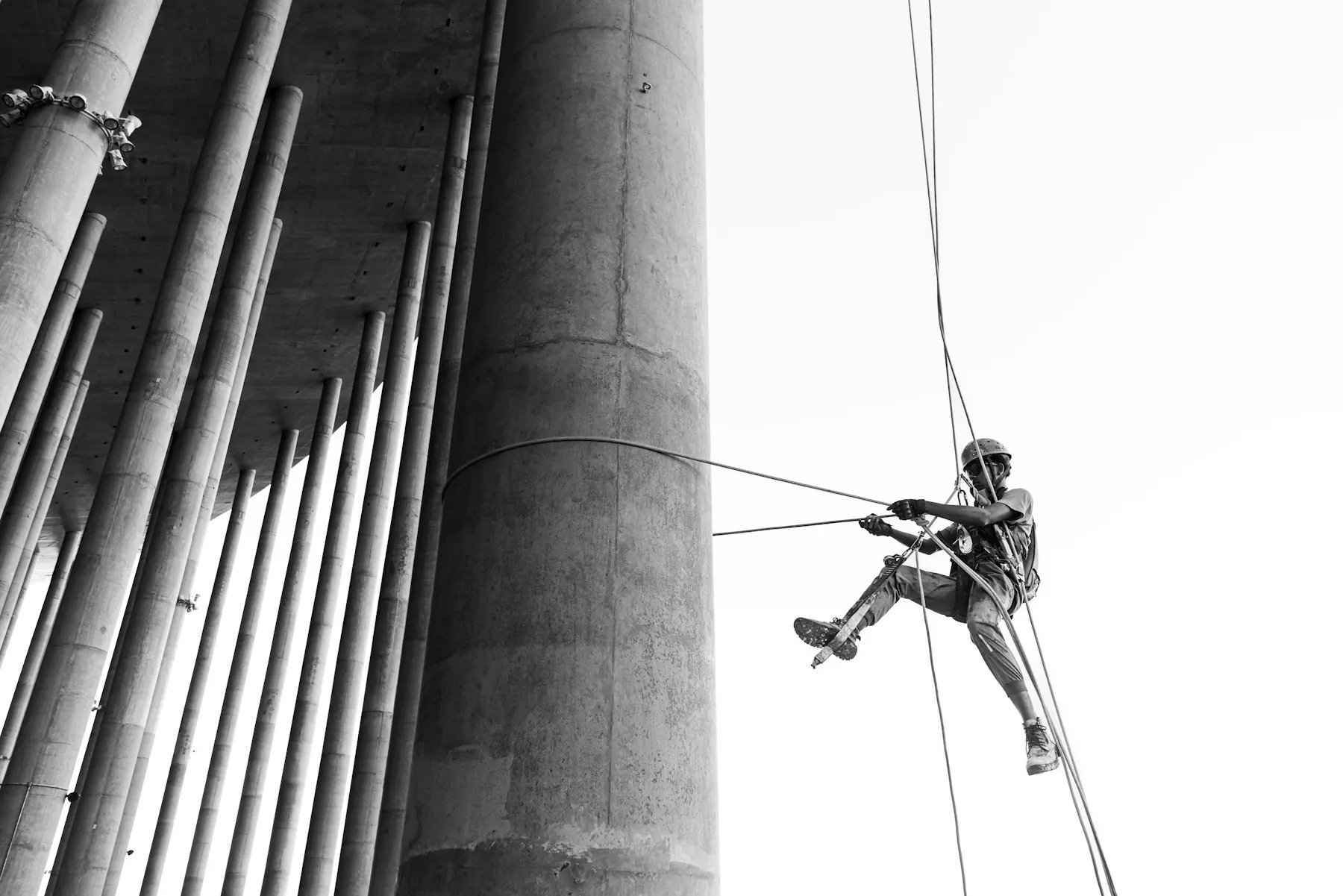
Every building eventually needs someone to work at height: cleaning a curtain wall, clearing a roof gutter, re-sealing a window, replacing a light fitting in an atrium, rectifying cladding after a Periodic Façade Inspection. For the contractor this is routine. For the building owner, the managing agent or the MCST, it is one of the few moments when a decision they make — who to hire, what to check, what to allow onto the roof — can end in a fatality investigation on their own premises.
Singapore’s law does not treat the owner as a bystander. The Workplace Safety and Health Act 2006 (WSH Act) assigns duties by role: the occupier who controls the premises, the employer of the workers, and the principal who engages contractors. The Workplace Safety and Health (Work at Heights) Regulations 2013 then set specific height triggers, permit procedures and equipment rules. Since 1 June 2024, the maximum fine for most breaches of those Regulations has been S$50,000 per offence.5
This guide explains who owes what, the numbers that matter (2 m, 3 m, S$50,000, 25 demerit points), what MOM’s recent enforcement data shows, what a bizSAFE certificate does and does not prove, and a practical checklist for an owner or MCST before any contractor goes over the edge.
64% of construction fatal and major injuries in 2025 came from smaller-scale works such as A&A and renovation25
For building owners and MCSTs this matters because smaller-scale works are exactly what happens inside occupied buildings: a unit renovation, a ceiling replacement, a roof leak repair. MOM counted 95 fatal and major injuries on such works in 2025, against 45 on regular construction sites.25 Fatalities alone were split 5 and 7, so large sites remain dangerous too; but most of the people hurt in construction were hurt on small jobs.
Who owes a duty: occupier, employer, principal
The WSH Act does not ask “who owns the building?” It asks who controls the place, who employs the people at risk, and who engaged whom. One person can hold several roles at once.
The occupier
Section 4 defines the occupier as the person who has charge, management or control of the premises. Section 11 requires the occupier to take reasonably practicable measures to ensure that the workplace, the means of access and egress, and any machinery, equipment or substances under its control are safe and without risk to health for every person within the premises — not only its own employees.3
For strata-titled buildings, section 19 matters. It treats common areas used by workers as part of their workplace and places duties on the occupier of those common areas in relation to certain equipment and access.3 Roofs, façades, plant rooms and atriums are usually common property. An MCST that controls them is therefore likely to be the occupier for WSH purposes when contractors work there.
The employer
Section 12 requires every employer to take reasonably practicable measures to ensure the safety and health of its employees at work (s 12(1)) and of other people affected by its undertaking (s 12(2)), including providing safe systems of work, safeguards, instruction, training and supervision (s 12(3)).3 The contractor whose workers are on the rope or the scaffold carries this primary duty.
The principal
A principal is a person who engages another person, other than under a contract of employment, to supply labour or carry out work in connection with the principal’s trade, business or undertaking.3 Section 14 requires a principal to take reasonably practicable measures to protect contractors, subcontractors and their workers working under its direction. Section 14A, which applies to contractors engaged on or after 1 September 2011, adds a specific duty: the principal must take reasonably practicable steps to ensure the contractor has the necessary expertise and has taken adequate safety measures — and a contract term alone does not satisfy this duty.3
Whether a particular owner or MCST is a “principal” for a given job turns on the facts and the definition. But section 14A is a clear statement of policy: engaging a contractor is not a way to export the risk.
“Reasonably practicable” — and who proves it
Most of these duties are qualified by “so far as is reasonably practicable”. Section 47 puts the burden on the accused to prove that it was not practicable to do more, or that there was no better practicable means than the one used.3 In practice, an owner that cannot show what it checked, and why, is in a weak position.
Duty-holder matrix
| Duty holder | Typical person on a building job | Core statutory duty | Where it comes from |
|---|---|---|---|
| Occupier | Owner, MCST, or tenant in control of the area | Safe premises, access and egress; guard open sides over 2 m; fall prevention plan (specified workplaces); permit-to-work system (factories) | WSH Act s 11, s 19; WAH Regs regs 5, 8, 2023 |
| Employer | Contractor or subcontractor employing the workers | Safe system of work, training, supervision, suitable equipment | WSH Act s 12; WAH Regs regs 6, 7, 10, 1123 |
| Principal | Party engaging the contractor (owner, MCST, main contractor) | Protect contractors under its direction; verify contractor competence and safety measures | WSH Act s 14, s 14A3 |
| Officers of a company | Directors, managers | Personally liable for the company’s offence unless they prove no consent or connivance and due diligence | WSH Act s 483 |
The Work at Heights Regulations 2013: the numbers that matter
The Workplace Safety and Health (Work at Heights) Regulations 2013 (S 223/2013) came into operation on 1 May 2013. The fall prevention plan and permit-to-work requirements took effect a year later, on 1 May 2014, and were refined by amendment regulations that came into force the same day. Further amendments took effect on 1 June 2024.12
What counts as work at height
“Work at height” has no fixed height in the Regulations. It covers work where a person could fall from one level to another and injury is reasonably likely because of the distance. “Hazardous work at height” is narrower: work where a person could fall more than 3 metres, including falling into a depth.2
The first rule (reg 4) is avoidance: work at height must be avoided where it can reasonably be done safely at ground level.2 Telescopic poles, pre-assembly at ground level, and access from inside the building are all compliance tools, not just efficiency tools.
Height thresholds and triggers
| Trigger | Requirement | Duty holder | Regulation |
|---|---|---|---|
| Any work at height | Avoid if reasonably practicable; train workers; immediate supervision by a competent person | Responsible person (employer or principal) | Regs 4, 6, 72 |
| Open side or opening, fall more than 2 m | Cover or guard-rail; if not practicable, travel restraint; failing that, fall arrest | Occupier | Reg 82 |
| Guard-rails | Top rail at least 1 m high; gaps no more than 600 mm | Occupier | Reg 92 |
| Roof work, fall more than 2 m | Crawler boards, roof brackets or similar, with secure anchorage | Responsible person | Reg 162 |
| Fragile surfaces | Avoid; otherwise supports or covers; warning notices | Responsible person | Reg 172 |
| Fixed vertical ladders | Safety cage or equivalent above 3 m; landings every 9 m where rise exceeds 9 m | Occupier | Reg 182 |
| Hazardous WAH (fall more than 3 m) in a factory | Permit-to-work system with authorised manager and WAH safety assessor | Occupier of the factory | Regs 20–2812 |
| Industrial rope access | Two independent lines (working and safety); anchorages designed by a professional engineer; inspection each shift | Responsible person | Regs 29, 302 |
Fall prevention plan (FPP)
Regulation 5 requires the occupier of a workplace listed in the First Schedule to establish and implement a fall prevention plan where work at height is carried out, in accordance with the approved code of practice, and to make it available to an inspector on request.2 The First Schedule covers, among others, any worksite, any shipyard, specified petrochemical and chemical factories, semiconductor wafer fabs, and any other factory employing 50 or more persons.2
The WSH Council lists the elements an FPP must cover: fall prevention policy, responsibilities, risk management and control measures, safe work procedures, use of personal protective equipment, inspection and maintenance, training, incident investigation, and emergency response.18
Permit-to-work (PTW)
After the 2014 amendments, the PTW requirement applies only to workplaces that are factories under the WSH Act — a category that, as MOM’s factsheet notes, typically includes construction worksites, shipyards and manufacturing factories.1 Where a person could fall more than 3 m, the occupier must appoint an authorised manager and a WAH safety assessor and run the permit system.2
MOM’s guidance adds three practical points owners should know:1
- A PTW may not be needed where the 3 m fall risk is fully mitigated by effective edge protection — for example a flat roof with a parapet of at least 1 m and no openings — unless the responsible person decides to use one anyway.
- The regulations set no maximum validity, but MOM’s guidance is that an extended-duration permit should not exceed seven days and must be reviewed daily.
- The supervisor who applies for the permit should not also act as the WAH safety assessor for the same permit.
How a work-at-height permit moves (factory or worksite)
- The supervisor and workers identify the hazards and the control measures for the specific task; no work starts yet.
- The supervisor applies to the authorised manager through the WAH safety assessor, stating the safety measures in place.
- The WAH safety assessor inspects the location with the supervisor, checks the measures, and endorses the application.
- The authorised manager checks for incompatible work nearby and that workers have been briefed, then issues the permit.
- A copy of the permit is posted at the work area until the work is completed, the permit expires or it is revoked.
- The authorised manager reviews the permit daily and can revoke it or stop the work immediately.
The four-stage summary on the WSH Council’s work-at-height page follows the same sequence.18
The Code of Practice for Working Safely at Heights
The WSH Council’s Code of Practice for Working Safely at Heights is the approved code that the FPP must follow, and it is the reference MOM points employers to for work at completed buildings.1822 It sets out the risk management framework, the FPP and the PTW system in more detail than the Regulations, including guidance on multi-location permits and permit duration.1
“100% tie-off”: what the expectation really means
“100% tie-off” is not a phrase found in the Regulations. It is an industry expectation: whenever a worker relies on a fall arrest system, the worker is connected to a suitable anchor at all times while exposed to a fall — typically achieved with a twin-leg lanyard, so one leg stays clipped while the other moves past an obstruction.
The legal hooks are specific:
- Fall arrest equipment must be sound, free of patent defects and suitable; users must be trained; full-body harnesses need energy absorption and adequate fall clearance (reg 11).2
- Anchorages and lifelines must be inspected by a competent person each shift, with a register kept (reg 12).2
- Industrial rope access must use two independent lines — a working line and a safety line — and anchorages designed to a professional engineer’s design (regs 29, 30).2
In its 2018 circular to building owners, town councils and MCSTs on work at heights at completed buildings, MOM illustrated poor practice with a worker anchored to a balcony railing — an incorrect anchorage point combined with an incorrect work method.22 The point for owners: a harness is only as good as what it is attached to, and the building usually supplies that anchor.
Independent engineer's note
Permanent roof anchors, davit bases and gondola tie-backs are structural elements of your building. When a rope access or gondola contractor proposes new anchors, or relies on existing ones of unknown history, the anchorage design and load testing should be reviewed by a professional engineer who is appointed and paid by the owner, not by the contractor whose programme depends on the answer. RRD’s usual independent engineering partner is CVC Engineers, a Singapore PE consultancy covering civil and structural design, PE endorsement and temporary structures; the owner contracts with and pays the engineer directly, and remains free to appoint any PE. See our independent engineer model and PE endorsement explained.
Penalties: what a breach can cost
Under the Work at Heights Regulations
From 1 June 2024, MOM raised the maximum fine for WSH subsidiary legislation offences that are a major cause of serious harm from S$20,000 to S$50,000.5 MOM explained that the figure mirrors the 2.5-times increase in the WSH Act’s own maximum fine in 2006 (from S$200,000 to S$500,000), and that section 65(3) of the Act allows the Minister to prescribe up to S$50,000 or two years’ imprisonment for subsidiary-legislation offences that may cause death, serious injury or a dangerous occurrence.6
Under regulation 31 of the Work at Heights Regulations as amended:2
- Most core duties (avoidance, FPP, training, supervision, guarding, fall arrest, roof work, fragile surfaces, ladders, PTW implementation, rope access) — fine up to S$50,000, imprisonment up to 2 years, or both.
- Failing to produce the FPP for inspection — fine up to S$10,000.
- Permit paperwork duties (application, endorsement, posting) — up to S$20,000 and/or 2 years, rising to S$50,000 for repeat offenders.
Under the WSH Act
| Offence | Maximum fine | Maximum imprisonment |
|---|---|---|
| General penalty, individual (first conviction) | S$200,000 (S$400,000 repeat) | 2 years |
| General penalty, body corporate (first conviction) | S$500,000 (S$1 million repeat) | — |
| Failing to comply with a remedial order | S$50,000 plus S$5,000 per day | 12 months |
| Failing to comply with a stop-work order | S$500,000 plus S$20,000 per day | 12 months |
Source: MOM, WSH Act liabilities and penalties; WSH Act s 50.34 MOM also notes that where a repeat offence causes another death, the maximum fine is doubled.4
How courts set the fine
In Public Prosecutor v Manta Equipment (S) Pte Ltd [2022] SGHC 157, a three-judge High Court revised the sentencing framework for employers who breach section 12 of the WSH Act. Fines are set by a harm-and-culpability matrix, with the top band (high harm, high culpability) running from S$300,000 to S$500,000; the court increased the company’s fine in that case to S$250,000.20 The court indicated that the approach should in principle extend to other Part 4 duties — which include the occupier and principal duties discussed above.20
Enforcement and outcomes, 2022–2026
The Heightened Safety Period and what stayed
After a spate of fatalities — 36 workplace deaths by 1 September 2022, close to the 37 for the whole of 2021 — MOM declared a Heightened Safety Period (HSP) from 1 September 2022.7 Measures included debarment from hiring new foreign employees for up to three months after serious lapses, personal accountability of chief executives, and, from 1 October 2022, a harmonised safety disqualification criterion for public-sector construction tenders.7 The HSP was extended and ended on 31 May 2023.9
Several measures were retained or expanded afterwards:9510
- Chief executives must still personally account to MOM for serious WSH lapses.
- Companies issued a stop-work order must engage external auditors to review their WSH processes.
- From 1 June 2024, construction sites with a contract sum of S$5 million or more must install video surveillance where high-risk work is carried out.
- From 1 April 2024, public-sector construction tenders apply a Safety Disqualification framework (main contractors on projects of S$90,000 to S$1 million; all subcontractor tiers above S$1 million), a minimum 5% safety weighting for tenders above S$1 million, and electronic permit-to-work systems on projects of S$3 million and above.
The demerit point system
MOM’s Demerit Points System for construction dates from 2000. From 1 October 2022 it was tightened: one point for every composition fine (previously from the fourth onwards), and 25 points for a prosecution decision after a major injury or dangerous occurrence (previously 18).8 Points are valid for 18 months and accumulate across all of a contractor’s worksites.
| Event | Demerit points |
|---|---|
| Composition fine | 1 |
| Partial stop-work order | 5 |
| Full stop-work order | 10 |
| Prosecution for a dangerous occurrence, major injury or death of one person | 25 |
| Prosecution for an accident causing more than one death | 50 |
| Points within 18 months | Debarment from hiring new foreign employees |
|---|---|
| 1–24 | Nil |
| 25–49 | 3 months |
| 50–74 | 6 months |
| 75–99 | 1 year |
| 100–124 | 2 years |
| 125 and above | 2 years, and barred from renewing existing work passes |
Source: MOM circular MOM/OSHD/2022-05.8 For an owner, the practical effect is that a contractor with a recent SWO or prosecution may lose labour capacity mid-project — a programme risk as well as a safety signal. See cheap quote vs delay economics for why that matters.
What the statistics show
0.96 workplace fatal injury rate per 100,000 workers in 2025, a record low11
- 2025 overall: 36 workplace fatalities including six work-related traffic accidents; fatal injury rate 0.96 per 100,000 workers; major injury rate 15.7 (excluding platform workers).1112
- Construction: the combined fatal and major injury rate fell from 31.0 in 2024 to 26.3 in 2025 — but small-scale works, meaning A&A works and renovations, made up over 60% of the sector’s fatal and major injuries.11 Construction recorded 13 of the 36 deaths in 2025, the most of any sector, as reported from MOM’s annual report.24
- Falls from height: the WSH Council reported that fatal falls from height fell to four in 2024, a 10-year low, after a decade in which falls were consistently the second leading cause of workplace deaths.13 In the first half of 2025 they were again one of the two leading causes of fatalities across sectors, with vehicular incidents.14
- Enforcement intensity: in the first half of 2025 alone, MOM conducted more than 3,000 inspections in high-risk industries, detected close to 7,000 breaches, issued over S$1.5 million in composition fines and 28 stop-work orders, with safe work at height one of the focus areas.14
60% of construction fatal and major injuries in 2025 came from small A&A works and renovations11
The second statistic is the one owners and MCSTs should sit up for. The work that happens in existing, occupied buildings — the roof repair, the façade touch-up, the atrium light change — is where the sector’s serious injuries now concentrate.
bizSAFE: what the levels prove, and what they don’t
bizSAFE is a five-step WSH Council programme supported by MOM to build companies’ safety capabilities.16
| Level | What the company has shown | Validity |
|---|---|---|
| Level 1 | CEO or a board director attended the Top Executive WSH Programme; commitment to a WSH policy | 6 months, non-renewable |
| Level 2 | A trained Risk Management Champion who can lead risk assessments | 6 months, non-renewable |
| Level 3 | Risk assessments conducted for every work activity, verified by a risk management implementation audit by an MOM-registered auditing organisation (or an accepted alternative such as SCAL’s SLOTS) | Generally 3 years |
| Level 4 | A trained WSH management system champion, on top of Level 3 | Follows Level 3 basis |
| bizSAFE STAR | A WSH management system certified to SS 651:2019 or ISO 45001:2018, plus a risk management audit | Tied to the certification |
Source: WSH Council.1617 From 1 January 2026, a company without speed limiters in any of its lorries cannot complete a satisfactory Level 3 risk management audit.16
What bizSAFE does not prove. It is a company-level recognition. It does not certify the crew on your roof, the anchor they will use, or the method statement for your façade. MOM’s own data makes the limits clear: of 696 fatal and major injury cases in 2025, 47% involved non-bizSAFE firms and 53% involved bizSAFE-certified firms (STAR 30%, Level 3 18%, Level 4 5%).15 MOM cautioned that higher bizSAFE levels concentrate in higher-risk sectors, acknowledged that certification alone does not yet produce better outcomes, and said it is reviewing the programme to link certification more closely to actual safety performance.1511
Use bizSAFE as a filter, not a verdict. Check a contractor’s current status and expiry on the free bizSAFE status check,17 then judge the job-specific plan. Our guide to choosing a contractor and verifying licences covers BCA registration and insurance checks alongside bizSAFE.
Composite scenario: the gutter job that became a fatality investigation
An MCST of a mid-rise development needs roof gutters cleared before the monsoon. Three quotes come in; the cheapest is from a general cleaning company with bizSAFE Level 3. The managing agent issues a purchase order and hands over the roof key. No method statement is requested, and nobody mentions the polycarbonate skylights near the gutter line.
A worker steps onto a skylight panel to reach a downpipe and falls about 6 m into a stairwell. The contractor notifies MOM; the MCST, as occupier of common property, is asked for records of what it checked. MOM issues a stop-work order covering all roof work, so the planned waterproofing contract is suspended. The investigation looks at the contractor (no fragile-surface controls, no supervisor on the roof), the MCST (no access control, no hazard information, no competence check), and the officers of both.
Illustrative cost chain: the S$1,800 job becomes months of investigation, legal fees for the MCST council, an external WSH audit before roof access resumes, a delayed waterproofing programme with water ingress into top-floor units, insurance notifications, and a contractor accruing 25 demerit points. None of these numbers are a real case; the sequence is typical.
The owner’s and MCST’s pre-start checklist
Most of what an owner needs to do is ask the right questions before the purchase order — and keep the answers on file. That record is what demonstrates “reasonably practicable” if anything goes wrong.
Before any contractor works at height on your building
- Scope the hazard honestly. Tell the contractor in writing about fragile roofing (skylights, polycarbonate, asbestos-cement sheets), unguarded edges, voids, live electrical equipment and any anchors of unknown condition.
- Ask whether the work can be done without height. Telescopic tools, access from inside, or ground-level pre-assembly satisfy regulation 4 and are often cheaper.
- Check legal identity and capability. BCA registration or licence where relevant, bizSAFE status and expiry on the WSH Council status check, and work injury compensation and public liability insurance in force for the dates of work.
- Require a job-specific method statement and risk assessment, naming the access method (MEWP, scaffold, gondola, rope access, ladder), the anchorages, and the rescue plan for a suspended worker.
- Confirm who supervises. Regulation 7 requires immediate supervision by a competent person; get the supervisor’s name and training.
- Verify anchorages. Ask for the anchor inspection register and, for rope access or new anchors, PE design or certification; consider an owner-appointed engineer.
- Decide whether a permit-to-work applies. Where a fall of more than 3 m exists, check whether your premises or the works are a factory or worksite; many buildings require a building-management permit regardless.
- Control access. Issue roof and façade access only against an approved permit, for named workers, for a stated time, and retrieve keys at day end.
- Protect the public below. Barricade drop zones, close or divert walkways, and provide overhead protection where objects could fall on people; on a worksite, the Construction Regulations make adequate overhead protection an occupier’s duty.23
- Coordinate incompatible work. Do not allow façade work above an area where another contractor is working, or roof work during M&E testing, without a joint plan. See working in live premises.
- Plan for weather. Agree stop criteria for lightning, rain and wind, and who calls the stop.
- Keep records. File the method statement, permits, toolbox briefing attendance and daily photographs. If it is not written down, it will be hard to prove.
For façade work specifically, the choice of access method changes the risk profile entirely; see rope access vs scaffolding vs gondola and façade defect rectification.
When something goes wrong: consequences for the owner
Immediate reporting
When a worker dies, the employer must notify the Commissioner as soon as reasonably practicable and submit an incident report within 10 days. When a self-employed person or member of the public dies, or a dangerous occurrence happens, the duty falls on the occupier of the workplace. If a member of the public is injured and taken to hospital, the occupier must also notify the Commissioner.19 An owner or MCST should know, before work starts, who will make which report.
Stop-work and remedial orders
Section 21 of the WSH Act lets the Commissioner issue a remedial order or a stop-work order where a workplace is unsafe, a duty has been breached or a risk is posed.3 A stop-work order can cover all or part of the premises; failure to comply carries a fine of up to S$500,000 plus S$20,000 per day.4 For the owner, an SWO on common property can halt unrelated works too — a waterproofing contract, a lift upgrade, a façade programme.
Investigation and prosecution
MOM investigates every duty holder, not just the employer. Questions an owner should expect: who controlled access; what hazard information was given; how the contractor was selected; whether the occupier knew of fragile surfaces or defective anchors; what records exist. Company officers can be personally liable under section 48 unless they show the offence happened without their consent or connivance and that they exercised due diligence.3
Civil liability
Separately from prosecution, an injured person or their family may sue in negligence. In See Toh Siew Kee v Ho Ah Lam Ferrocement (Pte) Ltd [2013] SGCA 29, the Court of Appeal folded occupiers’ liability into the general law of negligence, applying the Spandeck test of foreseeability, proximity and policy. For lawful entrants such as contractors’ workers, a prima facie duty of care generally arises; the occupier must take reasonable care, but is not an insurer of every entrant’s safety.21 Careful selection and supervision of a competent contractor will be part of what the court weighs.
Timeline of consequences
| Time after incident | What typically happens | Owner/MCST role |
|---|---|---|
| Hours | Emergency response; scene preserved; MOM notified | Provide access, CCTV, permits and contractor records |
| Days | Stop-work order possible; MOM site investigation; incident report within 10 days | Report as occupier where required; brief residents or tenants |
| Weeks | Interviews of all duty holders; external audit before SWO is lifted where required | Produce selection, access and briefing records |
| Months | Charging decision; demerit points to contractor; insurance and civil claims begin | Engage lawyers; notify insurers; reassess contractor panel |
How RRD approaches this
RRD carries out façade and atrium work at height under bizSAFE Level 3, including rope access works such as those at Biopolis 6 in April 2024 and scaffolding works in the Fu Lu Shou Complex atrium in September 2023. Each job starts with a site survey that records edges, fragile surfaces and anchorages, followed by an itemised quotation that lists access and safety cost items before signing. Works begin with a safety briefing, are supervised on site, and close with a joint inspection and handover. Where anchors or temporary structures need engineering input, RRD recommends that the owner appoint the engineer directly.
Key takeaways
- The WSH Act assigns duties by role. An owner or MCST that controls a roof or façade is likely to be an occupier, and may also be a principal; neither duty can be contracted away.
- The Work at Heights Regulations use 2 m for guard-rails and roof protection, and 3 m for the permit-to-work trigger in factories, including construction worksites.
- Penalties rose on 1 June 2024: up to S$50,000 and two years’ jail per core regulation offence; the WSH Act allows up to S$500,000 for a company, and the same for ignoring a stop-work order.
- Serious injuries now concentrate in small A&A and renovation works — the work owners commission in occupied buildings.
- bizSAFE is a useful filter, not proof that a particular crew and method are safe.
- What protects an owner is a written record: hazard information given, method statement reviewed, competence checked, access controlled.
Unsure what approvals and checks your works need? Try the approval navigator, browse the glossary, or see our façade works at height service page.
Questions people ask
Is an MCST legally responsible if a contractor's worker falls from the roof?
It can be. The WSH Act places a duty on the occupier of a workplace to keep the premises, access and egress safe so far as reasonably practicable, and section 19 treats common areas used by workers as part of their workplace. If the MCST engages the contractor, it may also have duties as a principal, including checking that the contractor is competent. The contractor, as employer, carries the primary duty for its own workers. Whether a particular MCST is liable depends on the facts, so take legal advice after any serious incident.
At what height do I need a permit-to-work in Singapore?
The Work at Heights Regulations define hazardous work at height as work where a person could fall more than 3 metres, including into a depth. A permit-to-work system is mandatory for that work in factories, a category that includes construction worksites and shipyards. Below 3 m, or outside factories, a formal permit is not mandated by the Regulations, but the general duties to avoid work at height where possible, train, supervise and guard open edges still apply. Many building managements require a permit for any roof or façade access anyway.
What is the difference between a fall prevention plan and a permit-to-work?
A fall prevention plan is a documented, site-specific plan covering policy, responsibilities, risk controls, procedures, equipment, inspection, training, incident investigation and emergency response. It sets the system for the whole site. A permit-to-work is a task-level control: before each piece of hazardous work at height, a supervisor applies, a WAH safety assessor checks the measures on site, and an authorised manager issues a permit that is reviewed daily. Occupiers of specified workplaces, including any worksite, must have the plan; the permit applies in factories.
Does bizSAFE Level 3 prove a contractor is safe to work at height?
No. bizSAFE Level 3 shows that the company has had a risk management implementation audit by an MOM-registered auditing organisation, meaning risk assessments exist for its activities. It does not certify the specific crew, equipment or method on your job. MOM data for 2025 showed bizSAFE-certified firms accounted for 53% of fatal and major injury cases, and MOM has said certification alone does not yet produce better outcomes. Treat bizSAFE as a minimum filter, then check the job-specific plan.
What happens after a serious fall at my building?
The employer must notify MOM and file an incident report within 10 days; the occupier reports deaths of non-employees and dangerous occurrences. MOM may issue a stop-work order, which can halt all or part of the works until the hazards are rectified, and failure to comply carries a fine of up to S$500,000. MOM investigates all duty holders. The contractor accrues demerit points, and civil claims for negligence may follow against any party that owed a duty of care.
Can an MCST transfer all safety liability to the contractor by contract?
Not for statutory duties. MOM's guidance on the permit-to-work system states that an occupier cannot delegate its statutory duties to a third party by contractual arrangement, and section 14A of the WSH Act says a contract term alone does not satisfy a principal's duty to check contractor competence. Indemnity and insurance clauses can shift some financial consequences between the parties, but they do not remove the duties themselves or the possibility of prosecution.
What does 100% tie-off mean?
It is an industry term for staying connected to a fall arrest anchor at all times while exposed to a fall, typically by using a twin-leg lanyard so that one hook stays attached while the other is moved. The Work at Heights Regulations do not use the phrase, but they require fall arrest equipment to be suitable, anchorages to be inspected each shift, and industrial rope access to use two independent lines. Owners should ask how continuous attachment is achieved at every transition point.
Are the penalties for work at height breaches higher now?
Yes. From 1 June 2024, MOM raised the maximum fine for WSH subsidiary legislation offences that are a major cause of serious harm from S$20,000 to S$50,000. Under the Work at Heights Regulations, most core duties now carry a fine of up to S$50,000, imprisonment of up to two years, or both. The WSH Act's own general penalties remain up to S$500,000 for a company and S$200,000 or two years' jail for an individual.
Sources
25 sources. Official sources are marked dark. Links were checked when this guide was last updated.
- sso.agc.gov.sgWorkplace Safety and Health (Work at Heights) Regulations 2013 (S 223/2013), as amended by S 280/2014 and S 434/2024 — archived text of Singapore Statutes Online. https://sso.agc.gov.sg/SL/WSHA2006-S223-2013 ; text read via https://littdb.sfo2.cdn.digitaloceanspaces.com/litt/SG/SSOStatutes/subsidiary_legislation/WSHA2006-S223-2013.html (accessed Nov 2026) ↩↩↩↩↩↩↩↩↩↩↩↩↩↩↩↩↩↩↩↩
- sso.agc.gov.sgWorkplace Safety and Health Act 2006 (2020 Revised Edition), ss 4–6, 11, 12, 14, 14A, 19–21, 27, 47, 48, 50 — archived text of Singapore Statutes Online. https://sso.agc.gov.sg/Act/WSHA2006 ; text read via https://littdb.sfo2.cdn.digitaloceanspaces.com/litt/SG/SSOStatutes/acts/WSHA2006.html (accessed Nov 2026) ↩↩↩↩↩↩↩↩↩↩↩↩↩
- mom.gov.sgMinistry of Manpower — “WSH Act: liabilities and penalties”. https://www.mom.gov.sg/workplace-safety-and-health/workplace-safety-and-health-act/liabilities-and-penalties (accessed Nov 2026) ↩↩↩
- mom.gov.sgMinistry of Manpower — “Entrenching WSH excellence with increase in maximum fines and mandatory video surveillance”, press release, 27 May 2024. https://www.mom.gov.sg/newsroom/press-releases/2024/0527-entrenching-wsh-excellence-with-increase-in-maximum-fines-and-mandatory-video-surveillance (accessed Nov 2026) ↩↩↩
- iac.gov.sgMinistry of Manpower — “FAQs for the Increase in WSH Act Subsidiary Legislation Maximum Fines” (May 2024). https://www.iac.gov.sg/-/media/mom/documents/safety-health/faq-increase-in-wsha-sl-max-fines.pdf (accessed Nov 2026) ↩
- mom.gov.sgMinistry of Manpower — “Heightened Safety Period measures to address spate of workplace fatalities”, press release, 1 September 2022. https://www.mom.gov.sg/newsroom/press-releases/2022/0109-heightened-safety-period-measures-to-address-spate-of-workplace-fatalities (accessed Nov 2026) ↩↩
- iac.gov.sgMinistry of Manpower — WSH Circular MOM/OSHD/2022-05, “Revised Demerit Points System for the Construction Industry”, 15 September 2022. https://iac.gov.sg/-/media/mom/documents/safety-health/circulars/2022/circular-20220915-revised-dps-construction.pdf (accessed Nov 2026) ↩↩
- allenandgledhill.comAllen & Gledhill — “MOM announces exit from Heightened Safety Period and new measures for sustainable WSH outcomes” (2023). https://www.allenandgledhill.com/sg/publication/articles/24753/mom-announces-exit-from-heightened-safety-period-and-new-measures-for-sustainable-wsh-outcomes (accessed Nov 2026) ↩↩
- mom.gov.sgMinistry of Manpower — “WSH requirements in public sector construction and construction-related projects”. https://www.mom.gov.sg/workplace-safety-and-health/safe-measures/sectoral-level/wsh-requirements-in-public-sector-construction-and-construction-related-projects (accessed Nov 2026) ↩
- tal.sgWorkplace Safety and Health Council — “WSH Advisory for Fatal Accidents in Second Half of 2025” (2026). https://www.tal.sg/wshc/media/announcements/2026/wsh-advisory-for-fatal-accidents-in-second-half-of-2025 (accessed Nov 2026) ↩
- tal.sgWorkplace Safety and Health Council — “Fatal falls from height declined to a 10-year low in 2024”, press release, 18 March 2025. https://www.tal.sg/wshc/media/press-releases/2025/fatal-falls-from-height-declined-to-a-10-year-low-in-2024 (accessed Nov 2026) ↩
- mom.gov.sgMinistry of Manpower — “Singapore’s WSH performance in 1H 2025”, press release, 30 September 2025. https://www.mom.gov.sg/newsroom/press-releases/2025/3009-singapore-wsh-performance-in-1h (accessed Nov 2026) ↩↩
- mom.gov.sgMinistry of Manpower — “Written answer to PQ on data on fatal and major injuries involving bizSAFE enterprises”, 7 October 2026. https://www.mom.gov.sg/newsroom/parliament-questions-and-replies/2026/1007-written-answer-to-pq-on-data-on-fatal-and-major-injuries-involving-bizsafe-enterprises (accessed Nov 2026) ↩↩↩
- tal.sgWorkplace Safety and Health Council — “bizSAFE: What it entails”. https://www.tal.sg/wshc/programmes/bizsafe/about-bizsafe (accessed Nov 2026) ↩↩↩
- tal.sgWorkplace Safety and Health Council — “bizSAFE frequently asked questions” (validity, renewal, status check). https://www.tal.sg/wshc/programmes/bizsafe/frequently-asked-questions (accessed Nov 2026) ↩↩
- tal.sgWorkplace Safety and Health Council — “Preventing Falls from Heights” (incl. Code of Practice for Working Safely at Heights, FPP elements, PTW stages). https://www.tal.sg/wshc/Topics/Work-at-Height/Preventing-Falls-from-Heights (accessed Nov 2026) ↩↩↩
- mom.gov.sgMinistry of Manpower — “Work accident reporting: what and when to report”. https://www.mom.gov.sg/workplace-safety-and-health/work-accident-reporting/what-and-when-to-report (accessed Nov 2026) ↩
- allenandgledhill.comAllen & Gledhill — “New sentencing framework for employers under the Workplace Safety and Health Act 2006” (on PP v Manta Equipment (S) Pte Ltd [2022] SGHC 157), July 2022. https://www.allenandgledhill.com/sg/publication/articles/22060/new-sentencing-framework-for-employers-under-the-workplace-safety-and-health-act-2006 (accessed Nov 2026) ↩↩
- singaporelegaladvice.comSingaporeLegalAdvice.com — “Occupiers’ Liability in Singapore” (on See Toh Siew Kee v Ho Ah Lam Ferrocement (Pte) Ltd [2013] SGCA 29). https://singaporelegaladvice.com/law-articles/occupiers-liability-in-singapore/ (accessed Nov 2026) ↩
- iac.gov.sgMinistry of Manpower — WSH Circular “Safe Work at Heights at Completed Buildings”, 1 March 2018 (addressed to developers, building owners, town councils, MCSTs and contractors). https://iac.gov.sg/-/media/mom/documents/safety-health/circulars/2018/circular-20180301-safe-work-at-heights-at-completed-buildings.pdf (accessed Nov 2026) ↩↩
- littdb.sfo2.cdn.digitaloceanspaces.comWorkplace Safety and Health (Construction) Regulations 2007 (S 663/2007) — archived text of Singapore Statutes Online (reg 6 WSH co-ordinator; reg 25 protection against falling objects). https://littdb.sfo2.cdn.digitaloceanspaces.com/litt/SG/SSOStatutes/subsidiary_legislation/WSHA2006-S663-2007.html (accessed Nov 2026) ↩
- mustsharenews.comMS News — “2 delivery riders among 36 workplace deaths in 2025, total down from 43 in 2024: MOM”, 27 March 2026 (reporting MOM’s annual WSH report). https://mustsharenews.com/workplace-deaths-2025/ (accessed Nov 2026) ↩
- mom.gov.sgMinistry of Manpower — “Workplace Safety and Health Report 2025”, Key Facts and Tables (ii), (iii) and 3a. https://www.mom.gov.sg/-/media/mom/documents/safety-health/reports-stats/wsh-national-statistics/wsh-national-stats-2025.pdf (accessed Nov 2026) ↩↩
Use this guide in a report, a tender or a by-law briefing. Please link to the page so readers get the current version.